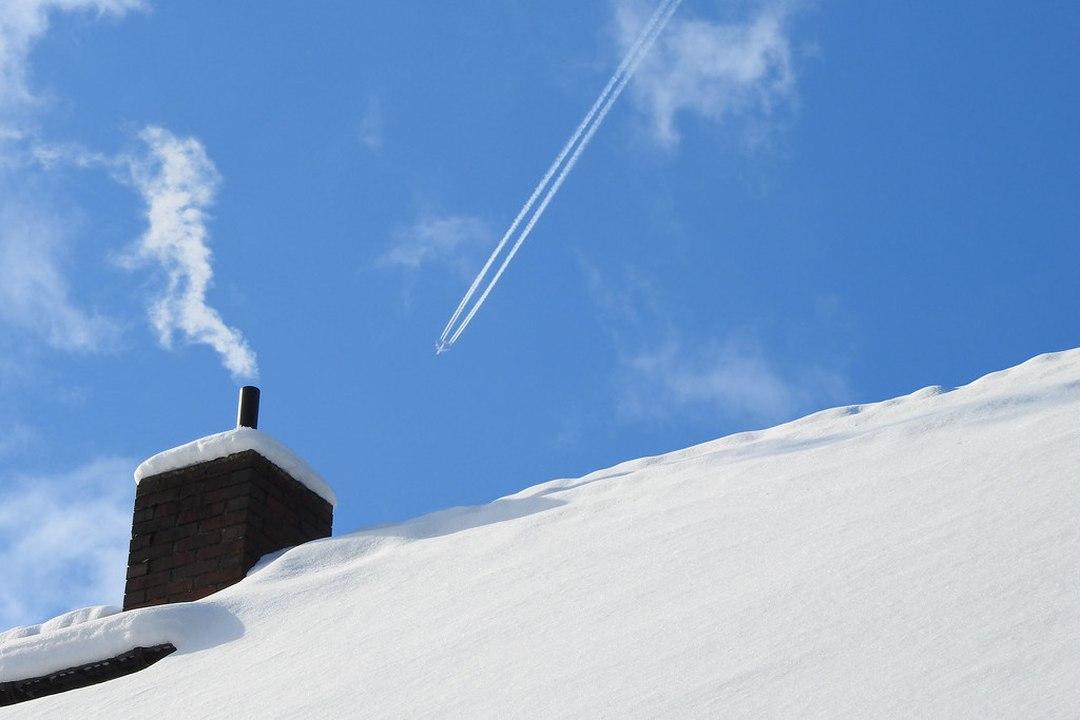
Relining comes up in three situations in Ventura: a camera inspection has found cracked clay tiles, a homeowner wants to fit a wood or gas insert, or a stove has been venting into a flue far too big for it. In each case the old flue cannot do its job properly, and the smoke shows it. Here is what decides the price of a new liner and what you get in writing before work starts.
Why the flue matters to the smoke
Exhaust rises because it is warmer than the air around it. A flue sized to the appliance keeps it warm and moving quickly all the way up, so smoke leaves cleanly and little condenses on the walls. A cracked flue lets heat bleed into the brick, and an oversized one gives the exhaust room to slow and cool. Slow, cool smoke drops creosote, spills back into the room when the door opens and drifts low over the roof instead of rising away. A new liner fixes the passage, and a cleaner burn follows from it.
What we fit
- Flexible stainless liner. The usual choice for wood inserts, stoves and gas inserts. It bends through offsets in the flue and comes in round sizes matched to the appliance outlet.
- Rigid stainless liner. For straight flues where the chimney allows it. Stiffer and smoother inside.
- Cast-in-place lining. A new liner formed inside the chimney itself, used on some masonry chimneys where strength as well as a fresh passage is wanted.
- Aluminum liner. Suited only to certain gas appliances, never to wood.
Which one fits depends on the appliance, the shape of the flue and its condition, and the quote explains our choice.
What sets the price
Our price list leaves liners off; each chimney is its own job. These are what move it:
- Height. A one story chimney takes a short run. Two stories, or a stack rising well above the roof, takes much more material and time.
- The appliance. A gas insert, a wood insert and a freestanding stove each need a particular size and type of liner, and the connection at the bottom differs.
- Flue shape and offsets. A flue that bends or narrows may need tiles broken out before the liner will pass.
- Insulation. Many wood installations need an insulating blanket around the liner, which adds material and labor.
- Top and bottom fittings. A top plate and cap at the crown, and at the bottom a connection to the appliance or a sealed plate across the old damper area.
- Roof access. Steep, high or tiled roofs take more setup.
The Level 2 camera inspection that usually comes first is $385, and it is often how a liner need is found in the first place. If a gas insert is part of the plan, the whole installed job, liner included, sits in our range of $2,750 to $5,550.
To start a quote, use the quote form to say what the liner is for, whether the house is one story or two and whether the flue has had a camera through it recently. If it has, we can work from that report. If not, we set up the camera visit first.
What the written quote holds
The quote names the liner type and size, the length, any insulation, the top and bottom fittings, the cap, and any tile removal or masonry work needed to get it in. If something turns up once work begins that changes the job, you hear about it with a price before we go further.
When a liner is the right answer
A liner is usually the fix when the brick around the flue is sound and the problem is inside it: cracked tiles, gaps between tiles, an oversized flue or a new appliance. When the chimney itself is leaning, crumbling above the roof or cracked right through, a liner alone will not do, and we say that plainly. Our chimney liner installation page goes further into the work, and chimney rebuilds covers the bigger jobs.
Quakes and old flues
Ventura County is quake country, and clay flue tiles are brittle. A chimney that looks fine from the street can hide tiles knocked out of line by the 1994 quake or by smaller shaking since. That is one reason we look before we line: a liner should go into a chimney we have seen from top to bottom.
Older Ventura houses add a second wrinkle. Many were built with a single clay flue serving a fireplace downstairs and nothing else, and later owners tied a stove, a furnace or a water heater into it. A shared flue like that rarely suits any of the appliances on it. Part of the visit is working out what actually vents where, so each appliance ends up with a passage of its own size.
Clean burning after the reline
A liner does its job properly only behind an appliance that burns well. If wood is part of the plan, dry fuel and a stove or insert run at the right air setting keep the new liner clean and the smoke from the top faint. A sweep each season is still part of owning a wood appliance; ours start from $415. For customers in Agoura Hills, where South Coast's Rule 445 can stop wood burning on poor air days, a gas insert with its own liner avoids those days altogether.
Ask for a price
When a report has said the flue needs a liner, or you are planning an insert, begin on our contact page. We will look at the chimney and put the liner price in writing.
Want a Cleaner Fire at Home?
Pettigrew Chimney Sweep looks at the appliance, the flue and the fuel, then sets out in writing what would cut the smoke. Visits run from Ventura to Oxnard, Ojai, Agoura Hills and the other listed cities.